



Charities
THE WHO, WHAT, WHERE, WHEN, WHY AND HOW OF OUR MISSION.
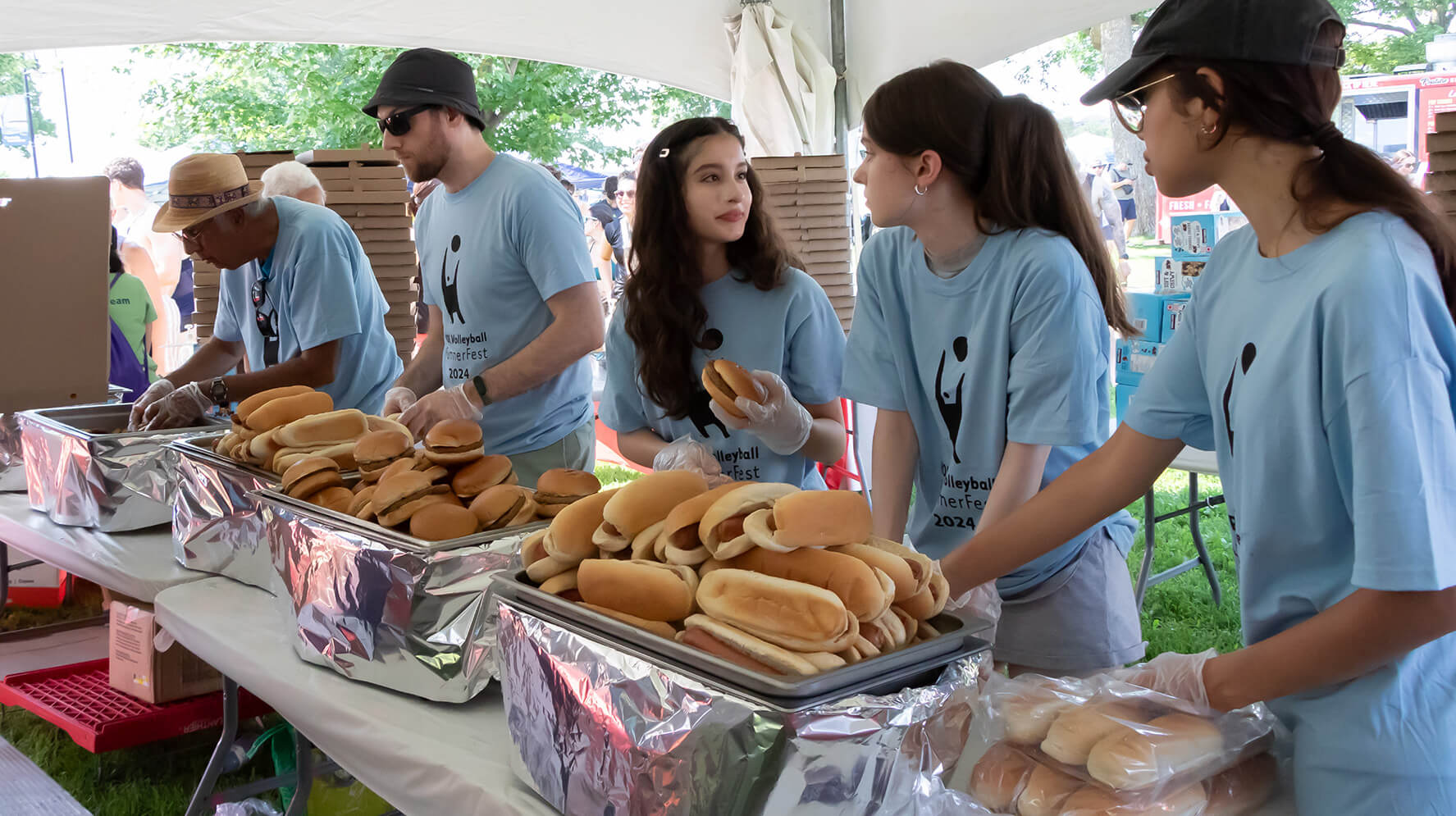
Over the years, H.O.P.E. has donated over $5 million to over 150 Recipient Charities. So, when we say “Helping Other People Everywhere,” we really mean it!
Spectacular and exciting events are our thing… but our charities are what we’re all about. That’s why, since 1982, we’re proud to say we’ve been able to support more than 150 charities and their programs through our funding – funding we receive through awesome people like YOU! Whether you’re registering a SummerFest team, buying a concert ticket, sponsoring our events, being an exhibitor or vendor, or making a donation, your generosity is a big part of what helps us give back to our community and the incredible work they do!
APPLICATIONS FOR OUR 2027 RECIPIENT CHARITIES ARE NOW CLOSED!
Charities selected to receive funding from Lone Star HOPE Volleyball SummerFest 2027 will be contacted in November by the HOPE Office.
HOW TO APPLY TO BECOME
A H.O.P.E. RECIPIENT CHARITY
Applications Open
Charity applications typically open up each year in August, after we wrap up all of our July festivities.
Submission Deadline
The deadline to apply comes about 5-6 weeks afterwards, where all submissions are vetted for completion and compliance before they’re sent to H.O.P.E.’s Board of Directors and Membership for final review.
Selection Process
The Board and Membership then vote for the applications whose funding projects speak to each individual the most. At the end of October, the top-voted charities will be notified that their application for funding has been accepted – et voilà! The next year’s charities are selected.
Announcement
In late November, at our annual Celebration of HOPE, the new Recipient Charities are publicly announced after the current year’s Recipient Charities are presented with their funding. This is one of our favourite nights of the year: one last huzzah with our amazing outgoing Charities, looking back on all of our hard work together… and welcoming new Charities to our H.O.P.E. family!
Here are our Recipient Charities for Lone Star HOPE Volleyball SummerFest 2026!
H.O.P.E. is committed to raising money for local Ottawa charities and over the years has donated over 4.9 million dollars to over 150 charities. Our moniker of “Helping Other People Everywhere” is never more apparent than in the work that we do every year, to put on our event to help these worthy organizations. Together with the support of our participants, volunteers, sponsors and our community, HOPE Volleyball SummerFest is pleased to support our local Charities.
The Children’s Aid Foundation of Ottawa (CAFO) empowers children, youth, and families involved in child welfare to create their own success and become resilient, thriving members of our community. In close partnership with the Children’s Aid Society of Ottawa (CASO), they identify critical gaps in the child welfare system and respond with targeted, community-based programs that mitigate the disparities in wellbeing and long-term outcomes faced by children in care. CAFO’s work focuses on three areas of impact:
1. Prevention Programs: They help prevent children from entering care by strengthening families and supporting safe, stable home environments. This includes essentials like beds and clothing, as well as enrichment opportunities such as tutoring, sports, and supports for children with disabilities.
2. Support for Children in Care: They offer tailored support to children and youth living in foster, group, or kinship care—ranging from comfort kits and cultural items to academic support and resources for kin caregivers.
3. Youth Transition Support: They assist youth aging out of care with safe housing, education, employment, mental health services, and life skills. Their support includes one-on-one help, mentorship, and post-secondary bursaries to promote long-term stability and success.
- Read More
-
PROGRAM BENEFITING FROM HOPE FUNDING
The Youth Transition Program provides a lifeline for youth as they leave care, addressing immediate needs and building skills for long-term success. The program has two core components:
Moving out of Crisis: Youth receive individualized supports to address urgent needs. This can mean first and last month’s rent to secure housing, essential furnishings, or emergency utility assistance to stop an eviction. For others, it means immediate access to primary care or mental health supports. These interventions stabilize youth who are otherwise at risk of homelessness or unsafe living situations.
Building Long-Term Success: Once stabilized, youth take part in workshops on financial literacy, cooking and nutrition, education and employment readiness, and healthy living. Just as importantly, they receive support in developing trusted relationships with caring adults in their communities, helping them build personal support networks that reduce isolation and create stability. The programming combines knowledge with hands-on practice, helping youth troubleshoot real-life situations and apply what they learn.
CHEO, a globally recognized pediatric health institution located in Ottawa, is dedicated to providing exceptional care and support to children, youth and their families and last year recorded over 700,000 visits. Since opening its doors in 1974, CHEO has offered a comprehensive range of specialized pediatric services to children across eastern and northern Ontario, western Quebec and Nunavut. CHEO is much more than a hospital; it's a specialized, acute-care hospital, a school and preschool, an Autism service provider, a research institute, a rehabilitation service provider, a child and youth mental health agency, a service coordinator with community providers, and more.
CHEO's team of over 6,500 staff, clinicians, scientists, researchers and volunteers all share the same vision of the best care for every child and youth. Their mission is to provide exceptional care and advance how children, youth and families obtain it through research, education and partnerships.
- Read More
-
PROGRAM BENEFITING FROM HOPE FUNDING
CHEO Foundation is currently raising support for their Kids These Days campaign, where they hope to raise $220M over the next 10 years to help build an Integrated Treatment Centre at the CHEO main campus and transform health care for kids today and tomorrow. Funds raised will go directly into three priority areas to support children's health, well-being and access to care:
1. Program delivery and expansion: A large portion of the funds will support the actual programs - staffing, materials, equipment, outreach and operations. This includes hiring qualified professionals (specialists, counsellors, youth workers), purchasing therapeutic tools or educational resources, and expanding program availability into underserved communities.
2. Accessibility and equity initiatives: Some funds will be used to reduce financial and geographic barriers. That means offering subsidized or no-cost services, covering travel, accommodation or childcare for families, deploying mobile or satellite services, and ensuring programs are culturally and linguistically inclusive.
3. Infrastructure, evaluation, and sustainability: To make sure the campaign endures and improves over time, funds will also be invested in infrastructure (technology systems, date management platforms), evaluation (measuring outcomes, assessing impact, refining approaches), and building sustainable funding models or reserves to reduce dependency on short-term.
In 1979, Children at Risk was established to be the service provider of Programs for children diagnosed with Autism (ASD) in Ottawa/surrounding region. Up to 2002, Children at Risk operated government-funded programs. Government amalgamation of childrens’ services eliminated this funding. With incidence of diagnosis of Autism now as high as 1 in 50 children (1 in 42 for boys), there is an increasing and on-going critical need for supports for the Autistic child and their family. Children At Risk strives to identify Needs and “fill the gaps” in services provided by publicly-funded and private service providers, many of which are limited or unavailable elsewhere in the Community. All Programs are financed solely through donations, grants and fundraising, which include:
- Camp Kaleidoscope
- Saturday Fun Club Respite Days
- Family Fun Respite Night
- Outing-Based Recreational Group "Do More, See More"
- Sibling Support Groups
- Information Seminars & Educational Workshops
- Food Donation Program
- Community Supports such as Air Canada Dreams Take Flight trips and donated event tickets
- Read More
-
PROGRAM BENEFITING FROM HOPE FUNDING
Since 2011, Children at Risk has offered a Summer Day Respite Camp for children diagnosed within the Autism Spectrum Disorders. This camp must be classified as a "Specialized Camp," due to the uniqueness of their clientele's needs.
Children at Risk’s objectives with a Specialized Camp is to provide a recreational camp which, through expertise and proven techniques, will accommodate the needs of children with Autism (such as communication, socialization and behaviour) seamlessly, while allowing the Camper to have the stimulation, excitement and fun that summer camp is renowned for - and an understated right of any child, regardless of the severity of their disability. Too often children with severe Autism are denied access to programs and/or if access is granted, the parent must pay extra to send a 1:1 worker. This discriminates against a child with higher needs and penalizes both the child and their family by not having this opportunity that is available for typically developing children.
For over 40 years, Shepherds of Good Hope has fostered hope and reduced harm in Ottawa by supporting individuals experiencing — or at risk of experiencing — homelessness. They do this through specialized services, programs and partnerships that address mental and physical health challenges, substance use disorder, and trauma.
They meet people where they are because that’s where they’re needed. As they encounter new problems and emerging needs, they develop pragmatic, innovative solutions that help those we serve to renew their sense of worth, dignity and community — and that create a measurable return on investment for our city as a whole. They believe in housing first, as with stability comes the realization of new goals and dreams. They always strive to provide homes for all, community for all, hope for all.
- Read More
-
PROGRAM BENEFITING FROM HOPE FUNDING
A vital source of support for their community soup kitchen is Shepherds of Good Hope's Hope Garden. Hope Garden is a 7000 square-foot plot of land in the Kilborn Allotment Gardens in Alta Vista, and has been producing fresh vegetables and herbs for the Shepherds of Good Hope since 2003. The yield of the garden supports the Shepherds of Good Hope Community Soup Kitchen, providing fresh produce to guests and residents who utilize the facility. Shepherds of Good Hope serves an average of 700 meals a day to those accessing the Community Kitchen and drop-in program, in addition to the more than 300 residents staying with them in our six supportive housing programs across the city of Ottawa.
They are seeking to increase the yield of the garden's produce to reduce food and grocery costs for their community soup kitchen, as well as create balanced meals for guests in their kitchen. The grant from HOPE Volleyball SummerFest will enable them to plant a wider variety of vegetables, and maintain the gardens' health. The fresh vegetables and herbs harvested from the garden will serve in creating well-balanced meals prepared and cooked by their incredible chef team.

Our 2026 recipient charities
Our incredible sponsors








1390 Prince of Wales Drive
Suite 406
Ottawa, Ontario
Canada K2C 3N6
Should you have any questions or require further information please refer to our FAQ’s Section.
Follow Us




You can translate the content of this page by selecting a language in the select box.
® hopehelps 2026